
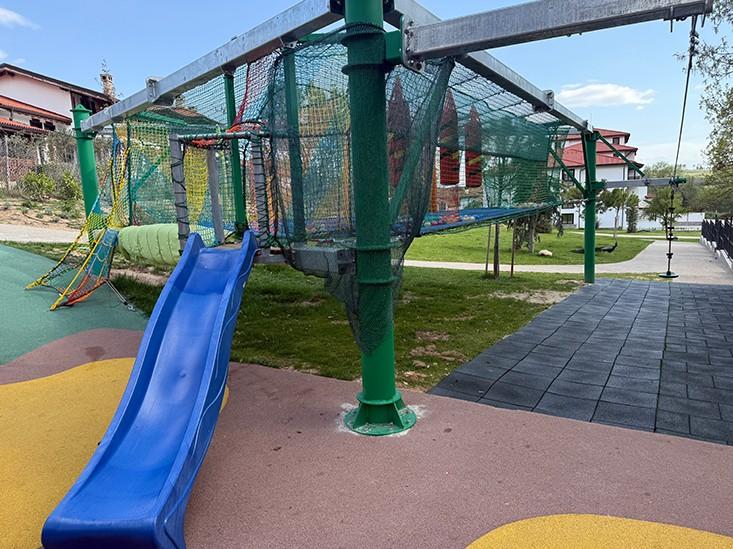
Risk Reduction for Playground Slides
A slide can become the most popular feature in a children's play area or a constant source of concern for the operator. The difference rarely comes down to its shape or height alone. Effective risk reduction for playground slides begins long before the purchase is made, with proper planning, a clear understanding of the intended users, and a responsible approach to every stage of the project.
For hotels, schools, municipalities, and residential developments, safety is not an optional feature. It is the foundation of trust. A well-designed slide allows children to enjoy the excitement of movement, while giving parents and staff the confidence to supervise play without concern. Achieving this requires close coordination between design, engineering, material selection, installation, and ongoing maintenance.
Risk Begins with the Wrong Choice
A slide should never be selected as a standalone decorative feature. It is part of a complete play environment where slide speed, platform height, access points, landing zones, and the movement of other children all interact. A model that looks impressive in a catalog may not be suitable for a specific location, age group, or expected level of use.
The first question should always be: who is the slide designed for? Young children need lower starting platforms, easy access, clearly visible routes, and a calm landing area at the end of the slide. Older children can enjoy more dynamic features, but only when the available space and overall structure allow for safe use. Mixing different age groups around a single slide without clear zoning often increases the risk of collisions and improper use.
Context is just as important. In an indoor play center, operators have greater control over access, lighting, and visitor numbers. In a public park or resort environment, the equipment is exposed to weather conditions, heavier traffic, and a wider range of user behaviors. The chosen solution should reflect the actual operating conditions, not simply the initial budget.
1. Design the Entire Journey, Not Just the Slide
The slide itself may be the most visible part of the attraction, but many accidents are prevented long before a child reaches it. Stairs, platforms, guardrails, and transition areas should guide children naturally through the structure while minimizing the risk of unsafe crossing points and conflicting traffic flows.
The climbing route and the exit route should never overlap. When children climbing toward the slide pass close to the landing area, the likelihood of collisions increases significantly. Effective design creates separate, intuitive circulation paths that are easy for children to understand and follow. In more complex multi-play structures, these movements should be assessed during the concept phase through flow and visibility analysis, ensuring that both users and supervising adults can navigate the space safely.
Guardrails and protective barriers are not one-size-fits-all solutions. Their height, spacing, and installation method must be tailored to the intended age group and the specific design of the structure. Areas that are too open can increase the risk of falls, while improperly sized openings may create entrapment hazards.
2. Provide Adequate Landing Space
The area at the end of a slide should be open, clearly defined, and protected. Children often slow down, turn around, or wait for friends after reaching the bottom. If the exit zone is located next to another play feature, a bench, a hard edge, or a crossing pathway, even a well-designed slide can create unnecessary risks.
Impact-absorbing surfacing is a critical part of the overall safety system. The type of surfacing and the required thickness should be determined based on the free-fall height and the specific characteristics of the equipment. Rubber surfacing, engineered loose-fill materials, and other solutions each offer different advantages in terms of appearance, maintenance, accessibility, and performance under varying weather conditions.
This is often where compromises remain unnoticed on opening day but become apparent over time. Poor installation, settlement of surfacing materials, or inadequate drainage can significantly reduce the protective performance of the surface. That is why safety surfacing should be viewed as an engineering investment rather than a final cosmetic layer.
3. Choose Materials for the Real-World Environment
The choice of materials affects not only durability but also how safe the slide feels in everyday use. Metal surfaces can become extremely hot when exposed to direct sunlight. Wooden components require proper treatment and regular condition checks. Plastic elements must maintain their stability and smooth finish despite intensive use and changing temperatures.
For outdoor installations, it is important to consider factors such as sun exposure, shade, moisture, wind, and drainage. A slide placed in a visually attractive but unprotected location may become too hot during the summer or slippery after rainfall. Shade structures, natural landscaping, and thoughtful positioning of the equipment can significantly improve user comfort without compromising the visual appeal of the play area.
High-quality materials should be combined with reliable connections, smooth transitions between components, and corrosion-resistant fastening systems. Particularly in premium environments, visual quality and safe construction should go hand in hand. Visible sharp edges, loose fittings, or damaged surface finishes are not just aesthetic concerns; they are potential safety hazards that should never be overlooked.
4. Don’t Replace Professional Installation with Quick Assembly
Even the best design loses its value if it is not installed correctly. Leveling, anchoring, structural connections, safety surfacing, and final inspections are all interconnected. A small deviation in the foundation can affect the stability of the entire system and influence how it performs under daily use.
Professional installation involves site assessment, foundation preparation, assembly in accordance with technical specifications, and thorough inspection of all critical components before the project is handed over. In more complex solutions, such as a slide integrated into a rope course, a tower structure, or an indoor themed environment, this level of coordination becomes even more important.
At Edutain Attractions, projects like these are approached as complete visitor experiences, from the initial concept and engineering design to manufacturing and on-site installation. A disciplined process, supported by an ISO 9001:2015-certified quality management system, helps ensure that every installation delivers its intended functionality while meeting the high expectations of clients and end users alike.
5. Plan for Maintenance from the Very Beginning
Risk reduction for playground slides does not end once the installation is complete. Intensive use, weather conditions, and natural wear and tear affect every piece of equipment over time. Operators should have a clear schedule for visual inspections, periodic technical checks, and procedures for addressing any issues that arise.
Daily inspections can identify obvious hazards such as obstacles in the landing area, dirt and debris, surface damage, or displaced safety surfacing. More detailed inspections should focus on fasteners, structural stability, component wear, and the condition of protective coatings. The required inspection frequency depends on usage levels, location, and seasonality. A busy summer resort has very different maintenance requirements from a kindergarten with a controlled daily routine.
It is also good practice to document all inspections. This creates a clear maintenance record, simplifies issue tracking and repairs, and demonstrates that safety is being managed consistently. Whenever there is any doubt about the integrity of a component, access to the affected area should be temporarily restricted until the issue has been resolved. Delaying a minor repair often leads to a far more costly problem later on.
6. Reinforce Safe Use Through a Well-Designed Environment
Signs and instructions cannot compensate for poor design, but they are a valuable addition to a well-organized play area. Information should be clear, concise, and placed where parents and staff are naturally likely to see it. Age recommendations, rules of use, and guidance regarding wet surfaces are most effective when they are tailored to the specific environment rather than presented as generic warnings.
Staff also play an important role. In hotels, shopping centers, and indoor play facilities, basic training on supervision, incident response, and visitor flow management can help prevent many common issues. The goal is not to overregulate play, but to provide children with the freedom they need within an environment that anticipates their natural energy, curiosity, and desire to explore.
7. Treat Safety as Part of the Project’s Value
The lowest-priced proposal is not always the most cost-effective solution. Lower-quality materials, components of uncertain origin, limited technical documentation, or installation carried out without specialized expertise can lead to higher costs in the years ahead. They can also affect the reputation of the venue, especially in environments where the family experience plays a key role in attracting visitors.
A well-designed and properly installed slide offers more than just safety. It activates the space, encourages physical development, creates a strong visual focal point, and makes the destination more appealing to families. When integrated with rope courses, climbing elements, themed features, or natural materials, it can become a memorable attraction that encourages longer stays and repeat visits.
The best time to protect both children and your investment is before the first sketch becomes an order. Choose a partner who asks the right questions about the site, age groups, expected usage, and maintenance requirements, because the joy of a slide is greatest when safety has been carefully and seamlessly built into every detail.
FAQ
1. Why shouldn’t a slide be chosen as a standalone element?
Because it is part of a complete play environment where height, speed, access and landing interact.
2. How to define the right age group?
Toddlers → low platforms, easy access.
Older kids → dynamic elements only when space allows safe use.
3. What is a “safe route,” not just a “safe slide”?
Separated flows, clear platforms, age‑appropriate guardrails.
4. What matters in the landing zone?
Clear space, no crossing routes, correct shock‑absorbing surfacing.
5. How to choose the right materials?
Based on climate, sun, moisture, traffic – metal, wood, plastic with durable coatings.
Author: Maria Mihova
