
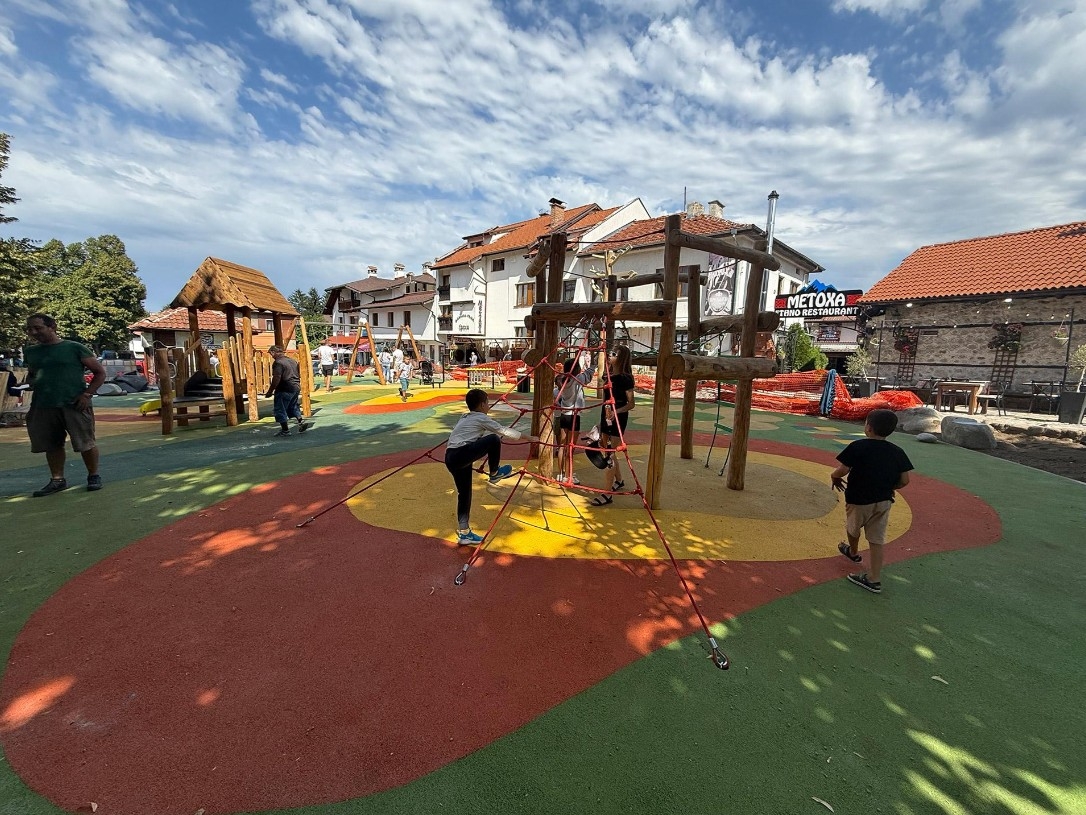
Does every children's playground need some shade?
When the air temperature feels pleasant, the surface of the slide, metal components, and the surfacing may already be too hot for children to play safely. This is exactly why the question “is shade necessary?” is not a decorative detail to be decided at the end of the project. It affects safety, family dwell time, and the real usability of the investment during the warm months.
For a hotel, school, municipality, or residential complex, well‑designed shade makes the play area more predictable and welcoming. It does not replace the correct choice of equipment, surfacing, or safe clearances. But when included from the concept stage, shade works together with them and creates an environment where children can move, interact, and play for longer.
Is shade necessary depending on the type of play area?
For most outdoor play areas, the answer is “yes,” but not every zone requires the same level of coverage. The project must consider local climate, sun orientation, peak usage hours, children’s age groups, and the character of the venue. A children’s zone in a seaside hotel used mainly between 10:00 and 17:00 has different needs from a small neighbourhood playground visited mostly in the afternoon.
Shade brings the greatest value over zones where children stay longer in one place: sandboxes, role‑play houses, low rope elements, creative activity tables, and parent seating areas. For tall towers, rope pyramids, or zip lines, full coverage is not always technically feasible or desirable. In those cases, it is more important to protect waiting points, seating areas, and routes with the highest risk of overheating.
There are also situations where excessive shade is not optimal. In cooler climates or on playgrounds used mainly in spring and autumn, dense coverage can make the space cold and damp. The goal is not to keep the playground permanently dark, but to offer a balanced mix of sunlight, coolness, and good visibility.
Shade as part of safety
Sun protection has a direct connection to thermal comfort. Heated surfaces can discourage children from using the equipment and, under certain conditions, create a risk upon contact. This affects elements with dark colours, metal components, rubber details, and outdoor surfacing in particular.
Good shade reduces the strain not only on children but also on accompanying adults. A parent who has a comfortable shaded spot with clear visibility of the play area stays longer and supervises more calmly. For operators, this means a better family experience, higher attendance, and fuller use of adjacent services such as restaurants, hotel zones, or public parks.
It is important, however, that shade does not introduce new risks. The structure must be engineered for local wind and snow loads, must not obstruct fall zones, and must not introduce hard obstacles along movement trajectories. Coverage height, column placement, drainage, and maintenance access are engineering matters — not decisions made “by eye.”
What shade solutions work in commercial and public venues?
The most suitable solution depends on the architecture, budget, and operational model. Most projects combine several types of shade rather than relying on a single element.
Natural shade from trees brings a pleasant atmosphere and can make the play area feel like an organic part of the landscape. However, it requires time, seasonal care, irrigation, and careful species selection. Young trees do not provide sufficient coverage immediately, and root systems and falling branches must be considered when planning surfacing and equipment placement.
Textile canopies and tensile shade sails are flexible solutions for open spaces. They can cover wide areas with a visually light silhouette and complement contemporary architectural concepts. Fabric quality, UV resistance, fastening details, and the ability to remove the structure during extreme weather are critical for long‑term performance.
Pergolas and solid shelters provide more stable year‑round protection and are often suitable above rest zones, activity areas, or service points. They can incorporate lighting, seating, and visual identity for the venue. The trade‑off is clear: higher durability and functionality typically require greater investment, foundations, and coordination with infrastructure.
In some themed play areas, shade can be integrated into the story of the space itself. The roof of a wooden playhouse, the sails of an imaginary ship, or the wide “leaves” of a play sculpture can provide partial protection without disrupting the sense of adventure. These solutions succeed only when the artistic idea follows engineering logic — not the other way around.
Designing: first the sun, then the equipment
A common mistake is completing the playground first and adding shade later. In such cases, canopy columns may end up in unsuitable areas, and the sails may fail to cover the spots that are actually used the most. A better approach begins with analysing the terrain and the movement of the sun throughout the seasons.
The design team should track where shadows fall in the morning, at midday, and in the afternoon. It is essential to understand which pieces of equipment will be most visited, where families arrive from, where they wait, and how the playground is serviced. If the zone is near a restaurant or hotel pool, the shade must support guest flow rather than block views or pathways.
Materials are also part of the solution. Lighter coverings and carefully selected colours can reduce heat buildup, but they do not eliminate the need for shading. Wooden structures create a warmer visual feel and blend well with natural environments, yet they still require proper protection, treatment, and periodic maintenance. The choice should not be reduced to a single material, but to a complete system for safe, long‑term use.
How to plan the budget without compromising quality
Shade should be included in the initial investment budget, not treated as an additional expense after opening. This allows foundations, lighting, surfacing, and drainage to be optimised instead of reworking completed areas. For venues with limited budgets, it is often wise to prioritise the most heavily used parts of the playground and plan for phased expansion.
Evaluate not only the delivery price but also the lifecycle of the solution. Cheap fabric with insufficient UV resistance or a structure without adequate corrosion protection can lead to frequent repairs, zone closures, and an unsatisfactory appearance. In premium family environments, these compromises become visible quickly and affect trust in the entire venue.
A professional contractor must coordinate the concept, engineering, production, and installation. Quality‑control processes, including work under ISO 9001:2015 standards, give the client a clearer basis for traceability and consistent execution. For Edutain Attractions, shade is part of the overall experience, not an accessory added to a finished playground.
The best solution keeps children free to play and adults comfortable to stay. If you are planning a new playground, start with one practical question: during the hottest hour of the day, where will the children, the parents, and your most valuable equipment be? The answer will show where shade delivers the greatest value.
FAQ
1. Why is shade not a decorative detail?
Because it affects safety, thermal comfort, stay duration, and real usability of the playground.
2. Do all playgrounds need shade?
Most do — but not the same coverage everywhere. It depends on climate, orientation, age group, and usage hours.
3. Which zones benefit most from shade?
Sandboxes, role‑play huts, low rope elements, creative tables, parent seating.
4. Can too much shade be a problem?
Yes — in cooler climates it can make the area cold and damp.
5. How does shade improve safety?
It prevents overheated surfaces, reduces burn risk, and improves comfort and visibility for parents.
Author: Maria Mihova
