
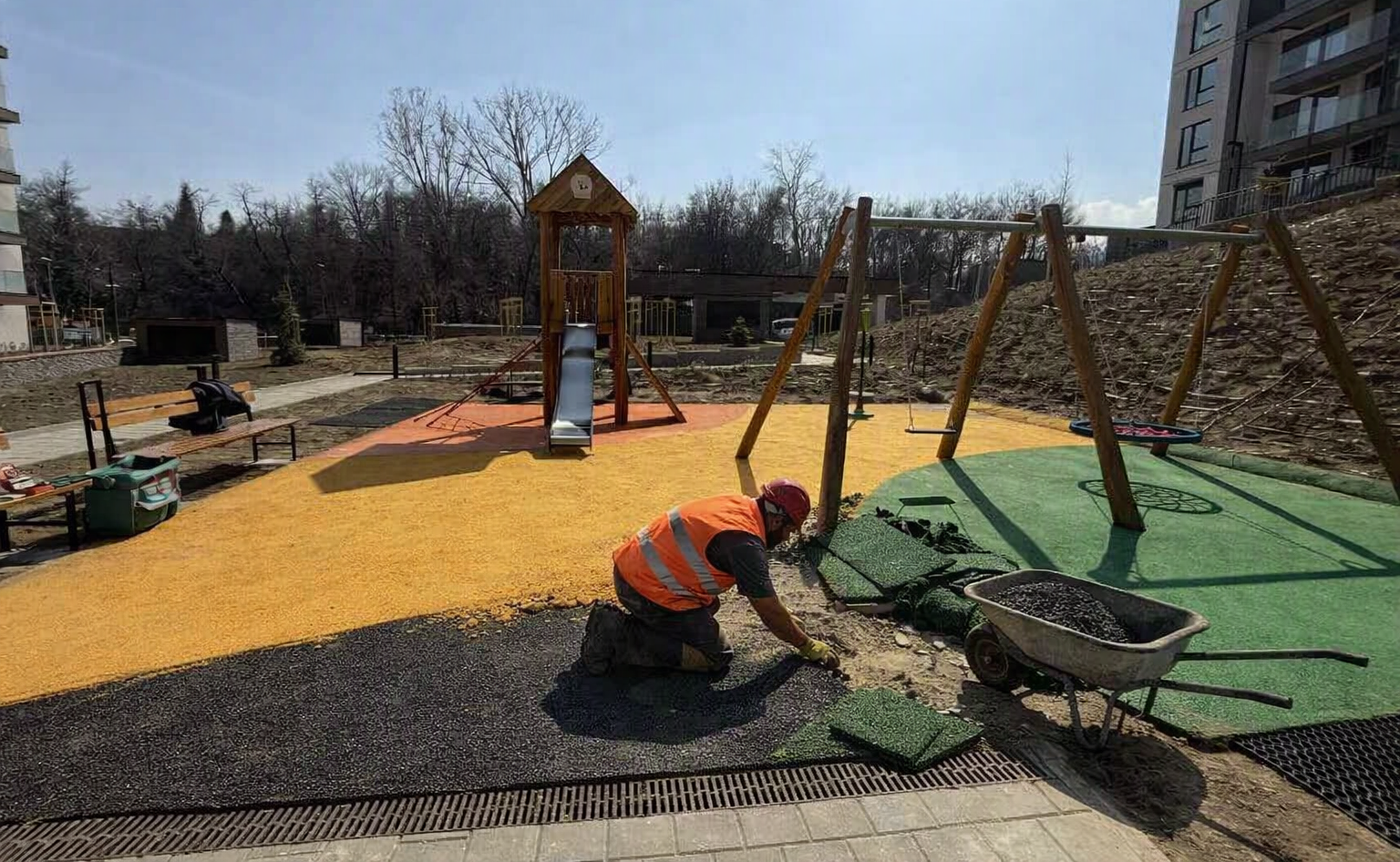
When Should Playground Surfacing Be Replaced?
A loose rubber tile, a puddle beneath a swing, or a visibly worn area under a climbing structure is not just an aesthetic issue. These conditions change the way the playground surface absorbs impact during a fall. The question of when to replace playground surfacing should be treated as part of safety management, not as a task that can be postponed until the next maintenance budget cycle.
For hotels, schools, municipalities, residential complexes, and commercial properties, surfacing is an asset that directly affects the family experience, the operator’s liability, and the long-term value of the space. A well-maintained play area encourages children to move, explore, and interact with confidence. A compromised surface creates risks in exactly the place where parents expect the highest level of care.
When Should Playground Surfacing Be Replaced? Warning Signs That Should Not Be Ignored
The clearest reason for replacement is when the surface no longer provides a reliable protective layer in fall-impact zones. For impact-absorbing rubber systems, this is often visible through deep cracks, crumbling material, separated joints, hardened areas, or missing components. If tiles begin lifting at the edges, creating changes in height or shifting underfoot, the risk of tripping becomes immediate.
With loose-fill surfacing, such as certified wood chips, sand, or gravel specified for the installation, the problem is not always obvious from a distance. Material gradually shifts away from swings, slides, and high-traffic areas. When the depth beneath equipment decreases, when the hard base becomes exposed, or when the material becomes heavily compacted and contaminated, simply raking it is not enough. Depending on the condition, topping up, restoring the required depth, or complete replacement may be necessary.
Water is another important warning sign. Persistent puddles, soft spots beneath the surface, eroded edges, and unpleasant odors indicate that drainage or grading is no longer functioning properly. Installing new surfacing without addressing underlying drainage issues is a short-term solution. The cause must be identified first, followed by repairs to the base and water management system.
Not every visual change means the surface must be replaced. Fading caused by UV exposure, for example, may be an aesthetic issue without affecting performance. Decisions should be based on a technical inspection rather than photographs or visual impressions alone.
Falls, Usage Levels, and the Age of the Playground
Surfacing does not function independently. The required thickness and performance characteristics are directly linked to fall height, equipment type, and the areas where children most frequently land. Beneath rope structures, climbing equipment, low ropes courses, and swings, wear is often concentrated and may occur significantly faster than in the surrounding areas.
This is why the overall age of the surfacing is not, by itself, a sufficient criterion. A premium rubber system in a moderately used hotel garden may retain its performance much longer than a surface in a school playground experiencing intensive daily traffic. Conversely, a surface with excellent original specifications can deteriorate prematurely due to poor foundations, improper installation, or lack of maintenance.
Changes to playground equipment also require reassessment. If a higher tower, rope net, or climbing feature is added to an existing playground, the original surfacing may no longer meet the fall protection requirements of the upgraded installation. In such cases, the question is not whether the surfacing still looks good, but whether it was designed for the new usage scenario.
What a Professional Inspection Evaluates
The right decision begins with an on-site inspection. This includes assessing the integrity of the surface, the stability of edging elements, surface levelness, drainage performance, and the condition of the supporting layers. High-impact areas, clearances around equipment, and the interaction between the surfacing and equipment foundations are also evaluated.
For rubber surfacing, it is important to determine whether the damage is isolated or part of a larger issue. A single damaged tile may be replaced individually if the base remains stable and the surrounding tiles are still in good condition. However, widespread separation, cracking, or deformation often means that spot repairs only delay an inevitable investment.
With poured-in-place rubber surfacing, both the upper wear layer and the resilient base layer must be assessed. Surface refinishing is only worthwhile if the impact-absorbing layer underneath remains intact. If moisture has penetrated the system or the foundation has been compromised, a more extensive repair is required.
Documentation is a valuable management practice. Photographs from routine inspections, maintenance logs, repair records, and information about the materials used make planning easier. They also support smooth transitions when responsibility for the site changes between teams, tenants, or operators.
Repair or Full Replacement?
Localized repair is a sensible option when damage has a clear and limited cause, such as impact from a foreign object, isolated mechanical damage, a separated edge, or localized wear. It is faster, less disruptive for visitors, and usually more cost-effective. It is important that the replacement material matches the existing surface in thickness, elasticity, color, and installation method.
Full replacement is more appropriate when wear is widespread, repairs are becoming frequent across multiple areas, persistent water issues exist, or the playground is undergoing a major renovation. It provides an opportunity to correct past design compromises, improve drainage and accessibility, and select a surface that better reflects the actual usage patterns of the site.
The cost of a localized repair should not be compared solely with the price of complete replacement on a given day. Future disruptions, repeated contractor visits, inconsistent appearance, and the increasing likelihood of emergency interventions must also be considered. For high-traffic sites, a planned replacement is often a better business decision than a series of smaller repairs.
Selecting New Surfacing Begins with the Concept
The best surfacing material is not the same for every playground. Rubber tiles provide a clean appearance and are easy to maintain locally. Poured-in-place rubber allows for custom shapes, graphics, color zones, and a strong visual identity, making it ideal for themed environments. Loose-fill solutions can feel natural and engaging but require continuous monitoring and regular replenishment.
Climate, shade, drainage, maintenance access, and usage intensity are just as important as color. In resort environments, surfacing must maintain an attractive appearance despite a constant flow of visitors. In municipal parks, resistance to vandalism and ease of maintenance may be the priority. In kindergartens, safety, hygiene, and accessibility for children with varying physical abilities are often the primary concerns.
Design also serves a developmental purpose. Color-coded routes, tactile transitions, and clearly defined play zones can support orientation, imagination, and active movement. These features should be integrated without compromising the technical performance of the surfacing.
Maintenance Extends Service Life but Does Not Eliminate the Need for Replacement
Daily visual inspections are particularly valuable for high-traffic sites. They can identify litter, displacement of loose-fill material, standing water, sharp objects, and visible damage before these issues become incidents. More detailed periodic inspections should focus on less obvious changes, including loss of surface depth, weakened joints, settlement around edges, and the condition of drainage points.
Cleaning methods should be appropriate for the specific material. Aggressive chemicals, unsuitable cleaning equipment, or excessive mechanical scrubbing can accelerate the aging of rubber surfaces. For loose-fill systems, regular redistribution and replenishment are part of safe operation, not merely cosmetic maintenance.
When a project combines professional design, quality installation, and a clear maintenance program, the surfacing becomes a reliable foundation for years of enjoyable play. At Edutain Attractions, this foundation is considered together with the equipment, children's movement patterns, and the overall character of the site, because a safe play experience is built as a complete system.
Do not wait until damage becomes obvious to every visitor. Schedule an assessment at the beginning of each season, after extreme weather events, and whenever changes are made to the play equipment. That way, the next child running toward their favorite climbing structure will find a space designed to support their confidence, not put it to the test.
FAQ
1. What are the key signs the surfacing must be replaced?
Cracks, loose edges, lifted tiles, puddles, softened base, exposed ground.
2. What risks does compromised surfacing create?
Unpredictable impact absorption, tripping hazards, higher incident likelihood.
3. How to identify issues in loose-fill surfacing?
Reduced depth, exposed base, contamination, compaction.
4. Why is water a critical warning?
Puddles and soft spots indicate drainage failure; new surfacing won’t last without fixing the base.
5. Does surfacing age matter?
Yes, but only with context — usage, installation quality, base condition, climate.

Maria Mihova
Published on: September 28, 2026 | Last Updated: September 28, 2026Founder & CEO at Edutain Attractions
Maria designs and delivers immersive, educational play experiences for hotels, municipal parks, and resorts worldwide. With over 15 years in international business development and adventure products, she builds play environments that combine safety, learning, and fun. Find out more about me
