
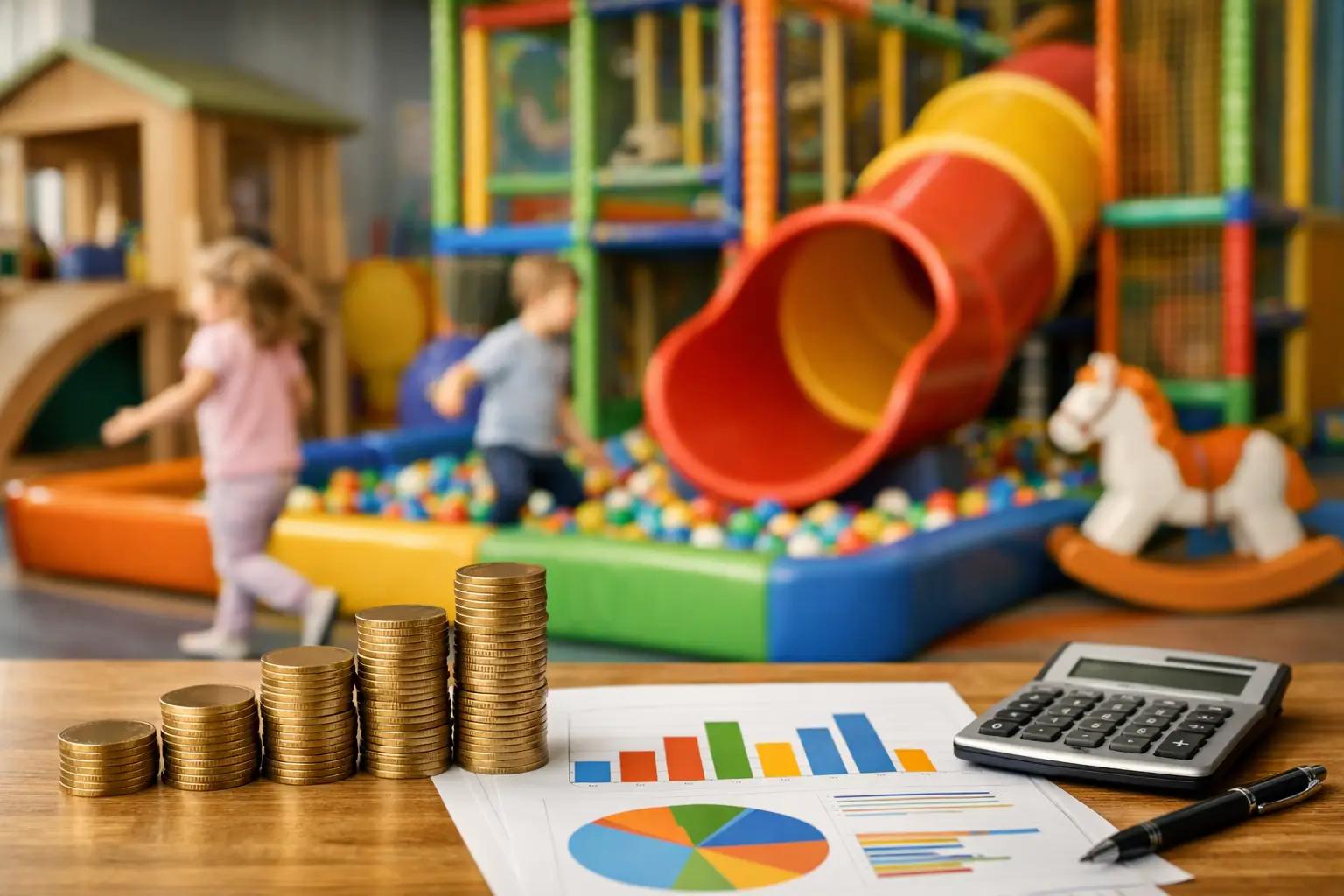
Return on Investment for a Children's Play Area
A children’s area is not merely a cost for equipment. It can turn unused space into a reason families choose your hotel, restaurant, residential complex, school, or public park. ROI (Return on Investment) — how and through what mechanisms this investment pays back — is the key question that must be answered clearly before the project begins.
In premium play environments, return on investment rarely comes from a single source. It is built through increased visitor numbers, longer stays, higher satisfaction, repeat visits, and stronger long‑term value of the property.
ROI starts with the right objective
The most accurate way to evaluate return on investment is to first define what problem the space solves. For a hotel or resort, this may be higher occupancy among family guests and better ratings. For a restaurant — longer stays for parents and more reasons for repeat visits. For a shopping centre — increased footfall and more time spent on site. For a municipality — activating a park, improving the environment for children, and delivering real value to the local community.
The same rope structure, zipline, or themed playground can generate different value depending on the context. That is why a project should not begin with choosing a product, but with a conversation about visitors, available space, expected flow, and business goals.
How the investment pays back in practice
The most visible effect is attracting a family audience. When parents feel confident that their children will play actively and safely, they choose one location over another much more easily. In competitive markets, this is often the decisive differentiator.
The next mechanism is time. A well‑designed play area keeps families longer without making them wait passively. In restaurants and hotels, this can influence additional consumption. In retail and entertainment venues, longer stays increase the likelihood of purchases and visits to more services.
Equally important is the impact on reputation. An impressive, clean, and safe play environment creates positive memories. Families share their experiences, recommend places, and return when children ask to visit their favourite zone again. This is a form of return on investment that may not appear immediately in financial reports, but has a direct impact on loyalty.
Don’t measure only direct revenue
The classic ROI formula compares net profit to total investment. However, for play attractions it is wise to track operational indicators as well: growth in family visits, average length of stay, occupancy, repeat bookings, guest ratings, and the utilisation of space that was previously inactive.
For example, a hotel can compare the number of family bookings before and after opening the children’s zone. A restaurant can track the average bill and dwell time at tables with children. In a residential project, indicators may include faster sales, higher perceived quality, and a stronger competitive position.
It is important to separate seasonal effects from the real impact of the investment. Compare similar periods, observe the data for at least several months, and account for changes in pricing, marketing campaigns, and visitor numbers.
Quality defines long‑term return on investment
A lower initial price does not always mean better ROI. Equipment that wears out quickly, requires frequent repairs, or fails to meet safety expectations carries hidden costs: operational downtime, dissatisfied visitors, replacement of components, and reputational risk.
Premium execution has a higher upfront cost but can deliver a longer operational lifespan, lower maintenance expenses, and lasting visual appeal. Materials, engineering, durable coatings, and professional installation are part of the financial logic of the project — not just its aesthetics.
At Edutain Attractions, the process covers concept, design, engineering, production, and installation, allowing solutions to be aligned simultaneously with the space, the audience, and operational requirements. Working according to quality standards, including ISO 9001:2015, supports predictability of execution and strengthens long‑term value.
Safety is part of the business model
A safe play area is not an optional extra. It is a condition for trust. Clear movement zones, appropriate surfacing, age‑appropriate challenges, and durable construction allow children to explore, climb, and play with confidence — and allow parents to feel at ease.
There is also a sensible balance. A very small or overly simple zone may not hold children’s interest. An overly complex attraction may be unsuitable for the age of the main visitors or increase the need for supervision. The best solution is the one that combines movement, imagination, capacity, and safety according to the specifics of the venue.
When the children’s environment is planned as a long‑term asset rather than a way to fill unused space, it begins to work every day: for happier children, calmer parents, and a more valuable business or public environment.
FAQ
1. What defines ROI for a children’s play area?
ROI begins with a clear purpose – what problem the space solves: more family guests, longer stays, park activation, higher occupancy, stronger competitiveness. “The most accurate way to evaluate ROI is to define what problem the space solves.”
2. How does a play area generate ROI in practice?
Through more family visitors, longer stays, higher satisfaction, repeat visits, and stronger reputation.
3. What metrics should be tracked beyond revenue?
Family bookings, average stay duration, occupancy, repeat visits, guest ratings, activation of previously unused space.
4. Why does quality determine long-term ROI?
Because low-quality builds lead to repairs, downtime, risk, dissatisfied visitors, and reputation loss, while premium execution ensures long lifecycle and low maintenance.
5. How does safety influence ROI?
Safety builds trust, keeps parents calm, and extends stay time – all essential for meaningful ROI.
Maria Mihova
Published on: August 05, 2026 | Last Updated: August 05, 2026Founder & CEO at Edutain Attractions
Maria designs and delivers immersive, educational play experiences for hotels, municipal parks, and resorts worldwide. With over 15 years in international business development and adventure products, she builds play environments that combine safety, learning, and fun. Find out more about me
