
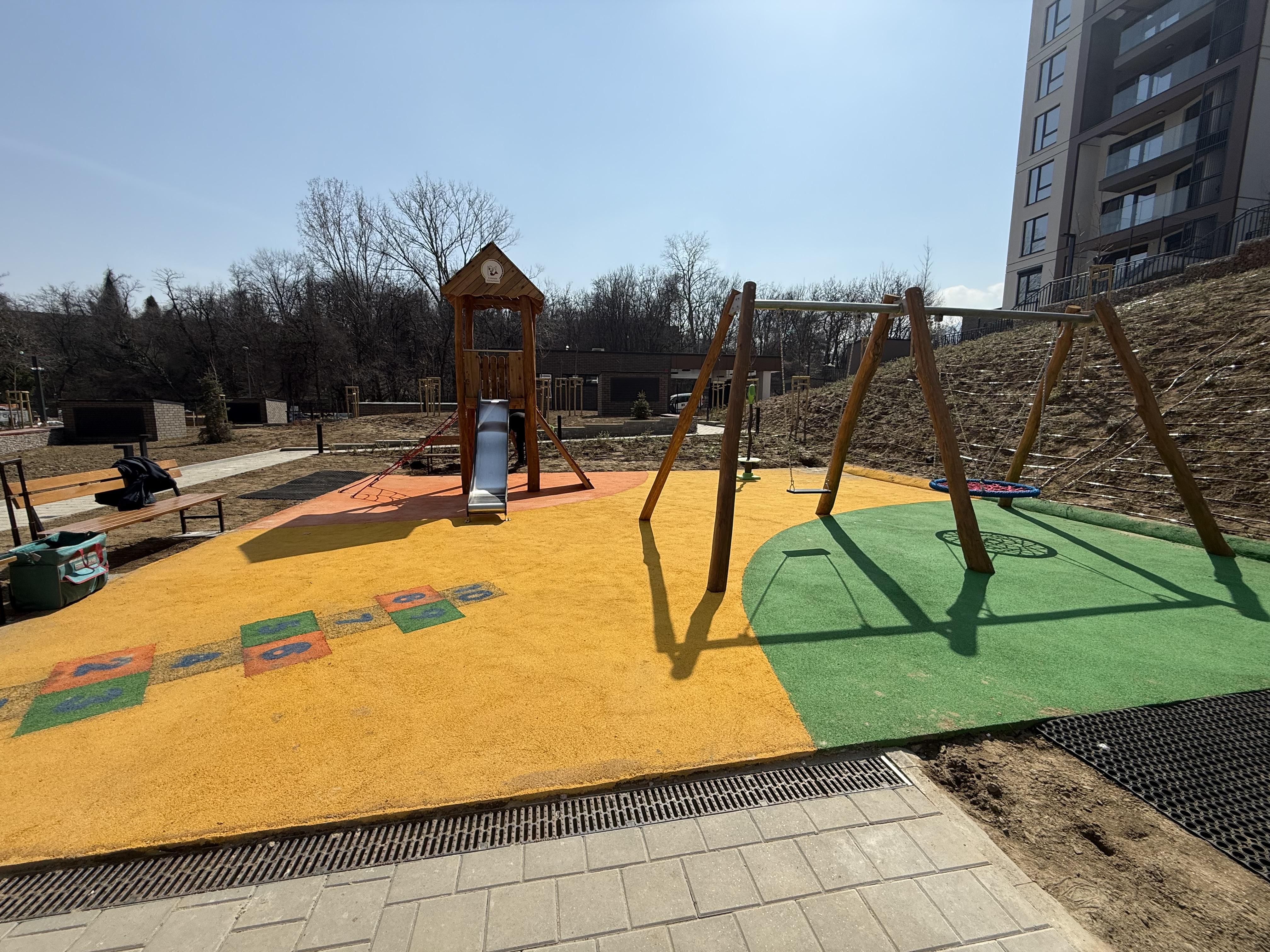
Installation of Premium Playground Equipment
When a playground must open on time — for peak season, a new school term, or the launch of a residential project — installation is not the final technical step.It is the moment when a good idea either becomes a safe, durable, and impressive environment, or begins accumulating compromises. This is why installing premium play structures means far more than assembling components on site. It is a discipline in which design, engineering, logistics, and quality control must operate as one system.
For investors, operators, and public clients, this has direct impact. A children’s zone is not just a convenience. It influences family dwell time, perceived quality, the venue’s reputation, and maintenance costs over the coming years. With premium solutions, installation must protect exactly this value.
What distinguishes premium playground installation
With a standard approach, the goal is often simple — the equipment must be placed, and the project must be closed. With premium execution, the goal is broader. The structure must function correctly in the real environment, look exactly as designed, withstand intensive use, and meet safety requirements without on‑site improvisation.
This becomes evident already in the preparation phase. Foundations, elevations, access for machinery, surfacing, drainage, safe clearances, and interaction with surrounding infrastructure are all checked. If you have rope constructions, a zip line, wooden towers, climbing modules, or combined edutainment elements, installation does not tolerate approximate decisions. Even a small deviation in levels or fixing can lead to issues in load distribution, wear, and long‑term operation.
Premium standards are also visible in the way the installation team works. They are not an isolated crew — they are an extension of engineering and manufacturing. When the design intent, structural logic, and on‑site execution are connected, the result is cleaner, safer, and more reliable.
Why installation is critical for safety and long‑term performance
The safety of children’s spaces does not depend only on certified components. It also depends on how those components are installed on the specific site. A perfectly designed tower, bridge, or rope net can lose part of its advantages if anchoring, levelling, or safety zones are not executed precisely.
There is also a frequently underestimated aspect — long‑term operation. Incorrect installation rarely shows on handover day. It appears months later as loosened connections, uneven load distribution, premature wear, issues with surfacing, or difficult maintenance. For a hotel, school, municipality, or commercial venue, this means not just repairs, but interrupted use, operational risk, and additional costs.
This is why professional installation must be viewed as part of risk management. It is especially important for venues with high traffic, seasonal peaks, or a clear need for impeccable visual results.
How professional installation of premium play structures works
A well‑organised process begins long before the first day on site. After the project is finalised, the terrain is inspected and key parameters are confirmed — access, foundations, routing, timelines of other contractors, and conditions for safe work. This is the stage where most delays are prevented.
Next comes logistical coordination. For more complex structures, delivery must follow the installation sequence. If elements arrive in the wrong order or without proper protection, time is lost and the risk of damage increases. In international and multi‑component projects, this step is decisive.
The actual installation includes positioning, fixing, structural assembly, connection checks, and adjustments according to design tolerances. For wooden structures, correct fitting and material protection are monitored. For rope systems and climbing elements, tension, geometry, and the behaviour of the entire system are controlled. In indoor children’s centres, special attention is given to interaction with existing architecture, fire‑safety requirements, circulation, and visibility for supervision.
Finally comes the stage that often distinguishes a responsible contractor from a merely competent installer — the final inspection. It includes checking critical points, finishing adjustments, reviewing safety zones, assessing readiness for use, and ensuring full documentation traceability.
Premium playground installation across different types of venues
Not every site places the same requirements. For a hotel or resort, priorities are often twofold — an impressive visual result and minimal disturbance for guests. This means precise planning of noisy activities, clean organisation of the work zone, and fast mobilisation of the team.
In schools and kindergartens, safety, clear operational logic, and durability under daily use are paramount. Here, details are not decorative — they are part of the pedagogical and functional value of the space. Zones must encourage movement, imagination, and independent play without creating unnecessary challenges for staff.
For municipal and public projects, installation typically comes with stricter coordination, formal inspections, and high public visibility. Every oversight is noticed. On the other hand, good execution remains over time and becomes a real asset for the community.
In residential complexes, shopping centres, and restaurants, installation also has a marketing function. The children’s zone must be attractive, yet adapted to heavy footfall, limited space, and the need for easy maintenance. Experience in integrating play into real commercial environments is especially valuable here.
What to look for in a contractor
The most reliable sign of a quality partner is that they treat installation as part of the full execution process — not as a standalone service. This means coordination between designers, engineers, manufacturing, and the on‑site team. When these units are disconnected, the risk of improvised decisions increases.
Look for demonstrable process discipline. Certified quality‑management systems, clear control stages, and strong documentation practices matter because they reduce reliance on improvisation. For premium projects, this is the difference between a predictable outcome and hoping everything will work out.
It is also important that the contractor understands the purpose of the space. A play structure is not an isolated product — it is part of a larger environment: hospitality, education, public service, or family experience. Companies like Edutain Attractions work precisely within this logic of a complete solution — from concept and engineering to delivery and installation on site.
Common mistakes that increase project costs later
One of the most frequent mistakes is planning installation too late, as if it were a short final activity. This leads to overlooked dependencies with surfacing, landscaping, electrical works, access for machinery, and the overall construction schedule. The consequences are delays, rework, and tension between contractors.
Another mistake is choosing a supplier based solely on initial price. With premium play structures, a lower offer may hide weaker installation control, limited coordination capacity, or insufficient experience with complex constructions. This is not always visible at the beginning, but it becomes evident during operation.
A third common issue is underestimating the specific conditions of the site. Slopes, drainage, soil type, climate exposure, and proximity to other functions all influence installation. A universal approach rarely works well. This is where professionalism becomes visible — not in the promise that everything is easy, but in the ability to anticipate what depends on the specific location.
When premium installation is most worth it
The short answer: almost always, when the space needs to function for many years, look strong, and carry reputational value. But there are situations where it matters even more. These include venues with high family traffic, projects with a pronounced architectural character, spaces with non‑standard structures, and locations where maintenance must be predictable and controllable.
There are also scenarios where the investor hesitates. For a smaller project with a limited budget, it may seem tempting to save on installation. Sometimes this is possible if the system is simpler and the environment is low‑risk. But when the play structure is a key part of the experience, compromise is rarely good business.
A well‑executed installation does more than complete the project. It turns design into trust — for parents, operators, institutions, and most importantly, for the children who must play freely, actively, and safely. If you are planning a new play space, think of installation not as a final expense, but as the decisive step that determines how the project will live for years ahead.
FAQ
1. Why is installation so critical for premium playgrounds?
Because installation determines whether the project becomes a safe, durable, and impressive environment or a source of compromises and future costs.
2. What makes premium installation different?
It is an engineering discipline, not assembly. It includes precise leveling, safe clearances, tension control, logistics, and final quality checks.
3. How does installation affect safety?
Safety depends on anchoring, leveling, fall zones, structural alignment, and correct fixing — not only on certified components.
4. How does installation affect long-term durability?
Poor installation leads to loosening, uneven load, premature wear, surfacing issues, and operational downtime.
5. What does a professional installation process look like?
Site check → logistics → structural assembly → connection control → adjustments → final audit.
Maria Mihova
Published on: August 25, 2026 | Last Updated: August 25, 2026Founder & CEO at Edutain Attractions
Maria designs and delivers immersive, educational play experiences for hotels, municipal parks, and resorts worldwide. With over 15 years in international business development and adventure products, she builds play environments that combine safety, learning, and fun. Find out more about me
