
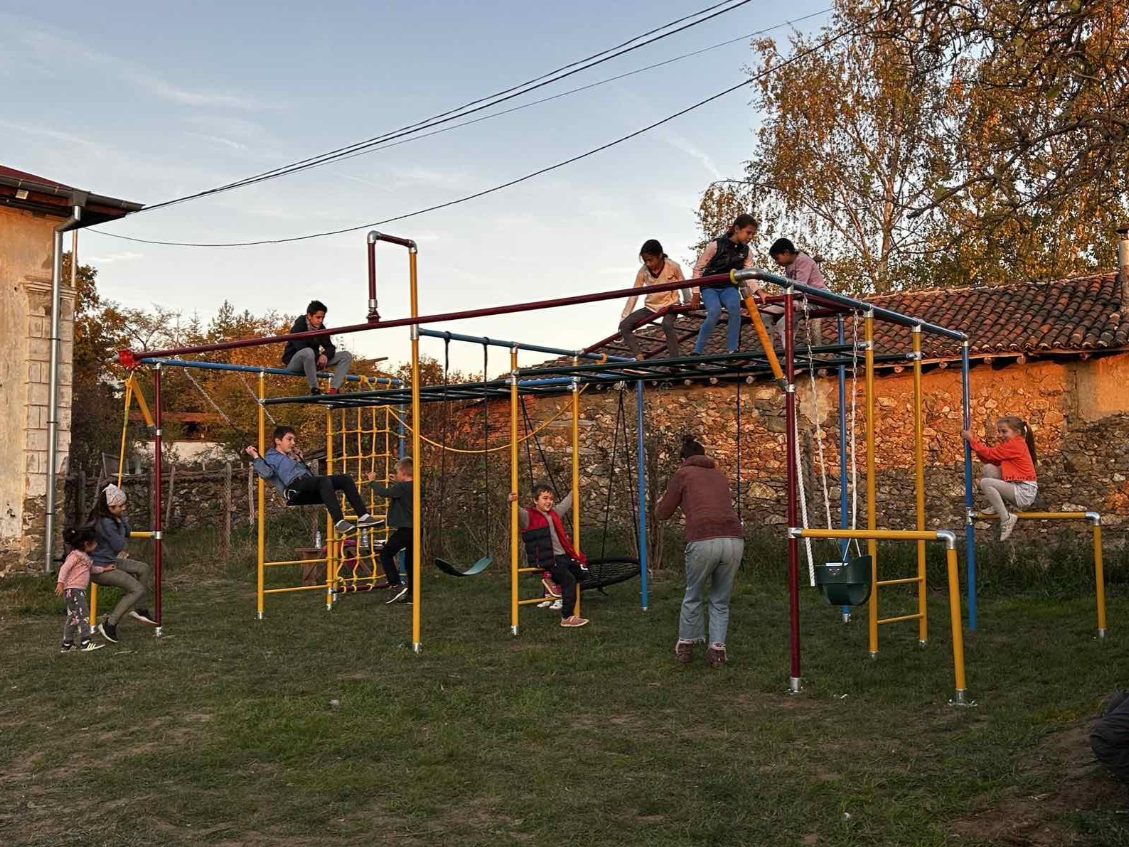
Climbing structures for kids
A well‑designed play space is instantly recognisable — children don’t wait for an invitation; they move toward it with energy and curiosity. This is why climbing structures for children are not just an accessory to a yard, park, or commercial venue. They are an active tool for movement, social interaction, and a stronger experience of the place.
For investors, schools, kindergartens, hotels, and municipalities, the choice is not about which structure looks most impressive in a visualisation. The more important question is how the solution will perform in a real environment — under daily use, across different age groups, under load, and throughout long‑term operation. Here, the quality of design, engineering approach, and installation has direct impact.
Why climbing structures offer greater value than standard play equipment
Climbing is a natural form of movement. It develops coordination, balance, strength, spatial awareness, and confidence. In a well‑designed configuration, the child doesn’t simply move from point A to point B — they make decisions, assess risk, test possibilities, and build independence.
For operators and clients, this translates into something very practical: higher engagement and longer time spent in the zone. In a hotel or vacation complex, this increases the family appeal of the venue. In a shopping centre, it can support dwell time. In a school or municipal environment, the structure creates real community value because it encourages active play instead of passive screen time.
There is another important aspect. Climbing solutions often offer a richer play scenario than classic single elements. Rope nets, volumetric structures, transitions, towers, and combined routes allow different difficulty levels and repeatable interest. This extends the life of the investment not only structurally, but also in terms of user value.
What defines a high‑quality climbing solution
Safety comes first, but it should never be understood as a compromise with the experience. Well‑designed climbing structures for children provide challenge without creating unmanaged risk. This requires correct sizing, appropriate heights, calibrated fall zones, durable materials, and precise installation.
Next comes durability. In public‑access environments, the load is daily and often intensive. Materials such as engineered timber, steel components, UV‑resistant ropes, and reliable connectors play a decisive role. An initially cheaper solution often becomes more expensive once maintenance, repairs, and a shorter lifecycle are taken into account.
Visual impact is equally important. The children’s zone is part of the venue’s overall identity. When the climbing structure is integrated with the architecture and character of the place, it works not only as play equipment but also as a distinctive element of the environment. This is especially relevant for hotels, residential complexes, restaurants with outdoor areas, and commercial spaces where design directly influences perceived quality.
Choosing based on the type of venue — not just the budget
One of the common mistakes is searching for a universal solution. In reality, different venues have different usage profiles, and this changes the criteria for selection.
In a kindergarten or school, the focus is usually on daily activity, clear visibility for supervision, and appropriate difficulty for a specific age group. Here, the structure must stimulate movement while supporting social play and the confidence of children who are still developing motor skills.
In a hotel, resort, or restaurant with a children’s zone, priorities often include strong visual impact, resistance to outdoor conditions, and the ability for children of different ages within one family to play together. Parents look for safety and peace of mind, while the operator seeks an experience that differentiates the venue from competitors.
In a municipal park or residential complex, the thinking must include high footfall, vandal resistance, easy maintenance, and logical integration into the existing environment. The value lies in balancing public access, long operational life, and an appealing visual presence that invites use.
Indoor or outdoor climbing structures for children
There is no single “better” choice — it depends on the business model, climate, available space, and expected visitor flow.
Outdoor solutions offer more freedom in scale, height, and connection to the natural environment. They are highly suitable for parks, yards, hotel grounds, and residential projects. The challenge is that they must withstand sun, moisture, temperature fluctuations, and intensive use. This makes the quality of materials and finishes even more important.
Indoor structures work exceptionally well in shopping centres, family entertainment zones, hotels, and year‑round venues. They allow a controlled environment, more consistent usage, and easier planning of visitor flow. The limitation usually lies in available height and the need for the design to adapt to the engineering conditions of the building.
The strongest projects begin not with a catalogue, but with an analysis of the space and the purpose of the investment.
How to evaluate safety beyond certificates
Certificates matter, but they are not sufficient on their own. When choosing a partner, it is essential to understand whether safety is embedded throughout the entire process — from concept and engineering design to manufacturing and on‑site installation.
Look for a contractor who can explain why a specific configuration was chosen, how critical points in the structure are managed, and what solutions are planned for the actual age group using the equipment. There is a significant difference between a structure that formally meets requirements and one that is designed for daily safe use in a high‑traffic environment.
Installation is an underestimated factor. Even an excellently manufactured structure can be compromised by improper on‑site execution. This is why clients increasingly prefer partners who work with a full‑cycle model — design, engineering, production, and professional installation under the responsibility of a single accountable party.
Why a customised project is often the better choice
Ready‑made models have their place, especially when timelines are short or the space is standard. But for many commercial and public venues, a customised project delivers a stronger result. The reason is simple — the children’s zone should not merely fill an empty area; it should solve a specific task.
Sometimes the goal is to activate an otherwise unused corner of a hotel courtyard. In other cases, the aim is to create a recognisable highlight within a residential complex. For schools, the priority may be a structure that supports motor development for a particular age group. When the project evolves according to context, the outcome is more functional, more durable, and more valuable for the user.
This is where the difference between an equipment supplier and a specialised partner becomes clear. Companies like Edutain Attractions work with a holistic approach, where concept, visual identity, engineering logic, and installation are part of one consistent quality system.
What to ask before making a decision
The best early‑stage conversations are specific. It’s not enough to request a quote for a climbing structure. It is far more useful to discuss the profile of the venue, the age groups that will use the zone, the expected intensity of use, the climate conditions, and the maintenance plan.
It is also worth asking how the entire process is managed. Is there clarity regarding timelines, technical documentation, logistics, installation, and ongoing maintenance? In serious projects, quality is not only in the final product — it is in the discipline of execution. For clients in the public and commercial sectors, this is essential because it reduces the risk of delays, unclear responsibilities, and additional costs.
An investment that keeps working long after opening day
When chosen correctly, climbing structures do more than serve as an attraction. They become part of the identity of the place. Children remember them, parents seek them out, and operators see a real impact in satisfaction, visitation, and the way the space is used.
This is why the best choice is rarely the fastest one — and almost never just a matter of initial price. What matters is that the structure is safe, durable, visually convincing, and designed for the specific environment. When play is thoughtfully designed, it delivers value every day — through more movement, more joy, and a more meaningful presence of children in the space.
FAQ
1. Why do climbing structures offer more value than standard playground elements?
Because they develop coordination, balance, strength, spatial awareness, and confidence, while increasing engagement and dwell time in real environments.
2. What defines a high‑quality climbing structure?
Safety, proper sizing, durable materials, professional installation, and design that balances challenge with controlled risk.
3. How should the choice depend on the type of venue?
Schools → visibility, daily activity, age‑appropriate difficulty.
Hotels → strong visual impact, durability, multi‑age usability.
Municipal parks → vandal resistance, easy maintenance, integration
4. Indoor or outdoor structures – which is better?
Outdoor → scale, height, natural environment.
Indoor → controlled climate, year‑round use.
The right choice depends on climate, space, and visitor flow.
5. How to evaluate safety beyond certificates?
By reviewing engineering logic, fall zones, material durability, installation quality, and the partner’s ability to justify design decisions.

Maria Mihova
Published on: August 18, 2026 | Last Updated: August 18, 2026Founder & CEO at Edutain Attractions
Maria designs and delivers immersive, educational play experiences for hotels, municipal parks, and resorts worldwide. With over 15 years in international business development and adventure products, she builds play environments that combine safety, learning, and fun. Find out more about me
