
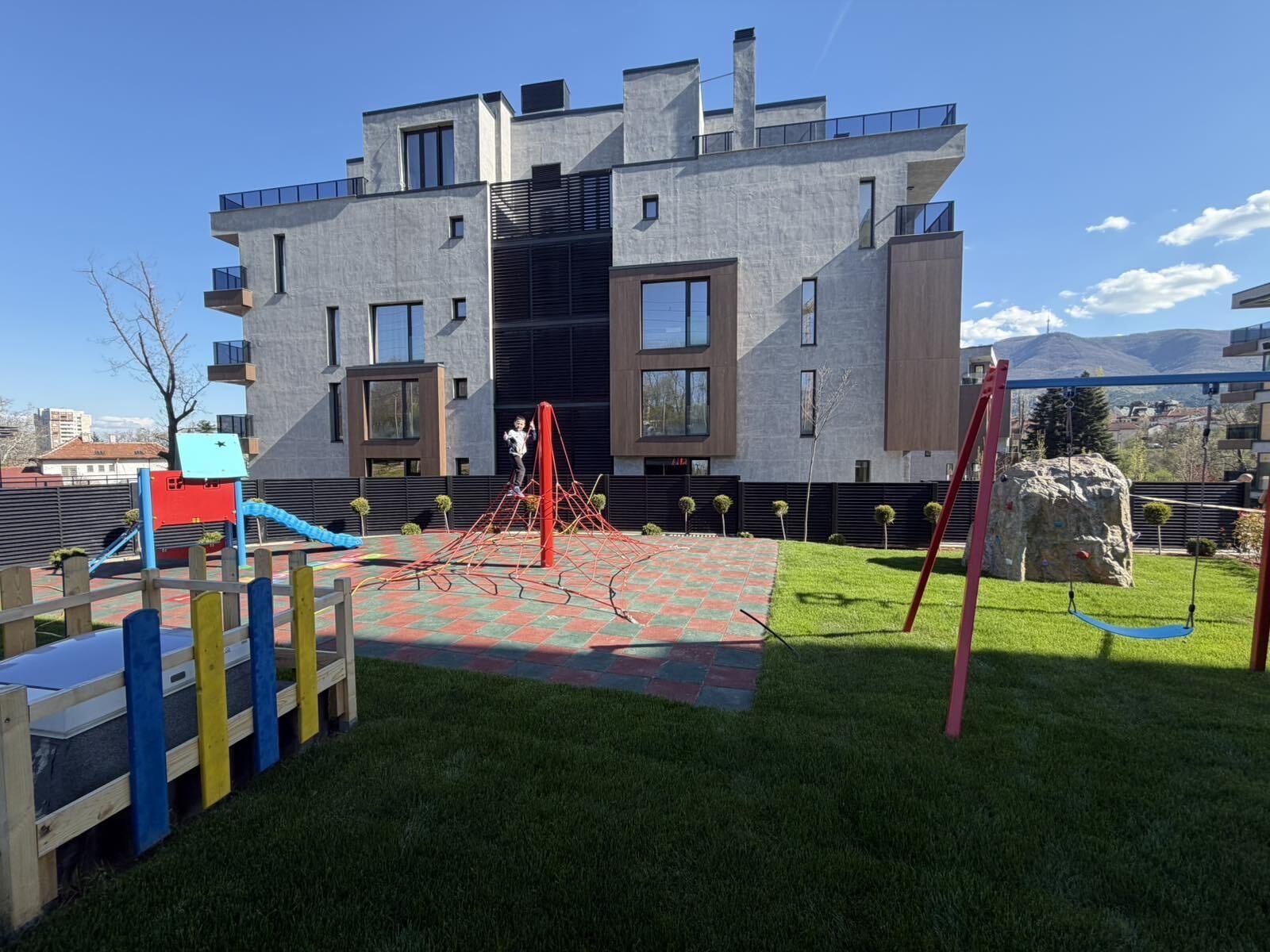
Kids’ playgrounds for private residential communities
When a family is looking at a new home, the playground in the yard is rarely just a “nice bonus.” For many parents, it’s a clear indication of how the developer views daily life in the complex. That is precisely why playgrounds in gated communities are no longer viewed as an add-on to landscaping, but as part of the quality of the environment that retains residents, increases satisfaction, and adds real value to the project.
In residential complexes, a good playground must function on several levels simultaneously. It must be safe, visually appealing, and able to withstand heavy use. It must cater to different age groups without creating conflicts within the space. And most importantly—it must be used every day, not just look good in an advertising brochure.
What Makes a Playground Suitable for a Residential Complex
In public spaces and hospitality, requirements often differ, but residential complexes have one defining feature: the playground becomes part of the daily routine. Children use it in the morning, after kindergarten, on weekends, and during holidays. This means constant load and high expectations from parents.
A well‑designed playground doesn’t start with choosing a slide and a swing. It starts with analyzing movement flow, age groups, visibility from the buildings, access, sunlight throughout the day, and how the space will be maintained. A complex full of young families has different needs than a mixed project with fewer permanently resident children. Universal solutions are rarely the best ones.
Between a Compact Zone and a Real Experience
Many developers begin with available space and budget, which is logical. But when the project is reduced to “just something for the kids,” the result is often superficial. A small combined structure may be enough for a limited area, but if the complex targets families, it will quickly prove insufficient.
A stronger approach is to design the playground as an experience with clear logic: a zone for younger children, climbing and balance elements for older ones, seating for parents, and open areas for movement. This creates not just occupancy of space, but a lively and active environment.
Playgrounds and Property Value
Some elements of a residential project are immediately noticeable to potential buyers—facades, common areas, landscaping. The playground is among them, but its impact is deeper because it shapes how the complex is used daily.
When the play area is well organized, families spend more time outdoors, common spaces become livelier, and the environment feels more communal. This is not just an emotional benefit. For developers and operators, it means stronger project recognition, better perceived quality, and more competitive market positioning.
Of course, a more expensive playground doesn’t automatically create more value. Overly ambitious solutions can be difficult to maintain or mismatched to the profile of the complex. The right balance lies between distinctive design, functionality, and realistic long‑term operation.
Safety Is Not an Option—It’s a Foundation
In family‑oriented projects, safety should not be treated as a final checklist. It must be embedded from the concept stage. Distances between equipment, fall heights, impact‑absorbing surfaces, visibility, and access control are all part of one system.
Problems rarely come from large structures—they usually arise from underestimated details: unsuitable surfacing, poor drainage, low‑visibility zones, or elements that don’t match actual age use. A playground may look impressive on installation day and still pose operational risks after a few seasons.
Materials That Withstand Real Use
In gated complexes, playgrounds are used almost continuously, not in occasional waves. This demands high durability from structures, coatings, ropes, fasteners, and protective details. Material choice is not just about aesthetics—it’s about lifecycle.
Wooden playgrounds bring warmth and a natural presence but require proper treatment and engineering logic. Metal elements offer stability and longevity when selected for outdoor conditions. Rope structures and climbing systems add movement and challenge but require precise sizing and quality installation. The best solutions usually combine materials based on function, not trends.
This is why a professional process matters. Responsible design, quality manufacturing, controlled installation, and a clear maintenance plan separate short‑term solutions from sustainable investments. For clients seeking premium execution, this sequence is essential.
Design That Develops, Not Just Entertains
Parents look for safety, but children look for meaning in play. If the space doesn’t offer movement, choice, and a bit of challenge, interest fades quickly. Modern playgrounds in gated complexes increasingly aim to develop balance, coordination, imagination, and social skills.
This doesn’t mean every playground must become a complex themed world. Sometimes a few well‑chosen elements work better than an overloaded composition. Climbing, traversing, balancing, spinning, and free role play—when these functions are combined intelligently, children stay active longer and use the space in diverse ways.
For residential complexes, solutions that encourage physical activity without requiring a large footprint are particularly valuable. Low-height rope courses, compact climbing structures, and combined systems with educational or sensory elements often yield excellent results. They maintain interest while fitting well into limited-space courtyards.
How a Successful Project Unfolds
The best results come when the playground is considered early, not at the final stage after parking, pathways, and landscaping. This allows proper positioning, infrastructure preparation, and stronger final design.
The process usually begins with defining goals: Is the complex aimed primarily at young families? What is the expected age structure? How intensively will the area be used? What visual language does the project follow? Then come the concept, engineering development, material selection, manufacturing, and on‑site installation.
When Standard Solutions Aren’t Enough
Some gated complexes work well with catalog solutions. But projects with higher positioning, distinctive architecture, or a specific family audience often require more than standard approaches. In such cases, customized design offers clear advantages.
This may mean a themed playground, natural materials, more expressive forms, or integrating play into the landscape itself. It may also mean better zoning for different ages and a carefully curated combination of equipment that matches the capacity of the complex. Personalization is not just aesthetics—it ensures the space feels at home and works better for the community.
Companies with full‑cycle capabilities, such as Edutain Attractions, are valuable partners in these projects because they can combine concept, engineering, manufacturing, and installation into one consistent process. For the client, this means clearer responsibility and better quality control.
One topic developers often underestimate is post‑opening maintenance. Even the highest‑quality playground needs periodic inspections, adjustments, and care for surfaces and surrounding areas. When planned in advance, operation is smooth and predictable.
What Investors Should Look For Before Deciding
When choosing a contractor, it’s worth looking beyond visualizations. What matters is how material quality is proven, how production is managed, what control standards are applied, and how installation is executed. Certified processes and clear project discipline are not formalities—they signal that the playground is built for real, long‑term use.
Equally important is that the contractor understands the business logic of the project. A residential complex is not just a plot for placing equipment. It is an environment that must support family comfort, strengthen the investment’s image, and ensure trouble‑free operation for years.
The most successful playgrounds are those that feel like a natural part of life in the complex. Children seek them out daily, parents feel at ease, and the investor sees that the decision continues to generate value long after the sale. When a playground achieves this, it is no longer an amenity—it is a well‑made project decision.
FAQ
1. What makes a playground suitable for a residential complex?
It must be safe, durable, visually appealing, and designed for daily use, serving multiple age groups without spatial conflicts.
2. How does a playground affect property value?
A well‑designed playground boosts satisfaction, encourages community life, and strengthens the project’s market positioning.
3. What safety elements matter most?
Shock‑absorbing surfaces, proper spacing, visibility, access control, quality installation, and planned maintenance.

Maria Mihova
Published on: July 21, 2026 | Last Updated: July 21, 2026Founder & CEO at Edutain Attractions
Maria designs and delivers immersive, educational play experiences for hotels, municipal parks, and resorts worldwide. With over 15 years in international business development and adventure products, she builds play environments that combine safety, learning, and fun. Find out more about me
